
Walking Rugby

Walking Rugby
Walking rugby is a non-contact, slower-paced game for anyone: players coming back from injury, people getting back into rugby, older players, or anyone who wants to stay connected to the game. It’s usually 7 v 7, but works just as well with 5 or 6 a side. Mixed teams are encouraged.
Equipment
- A tennis court or similar area (allow about 3m of width per player)
- Cones
- Size 3 ball
- 7 bibs
Field set-up
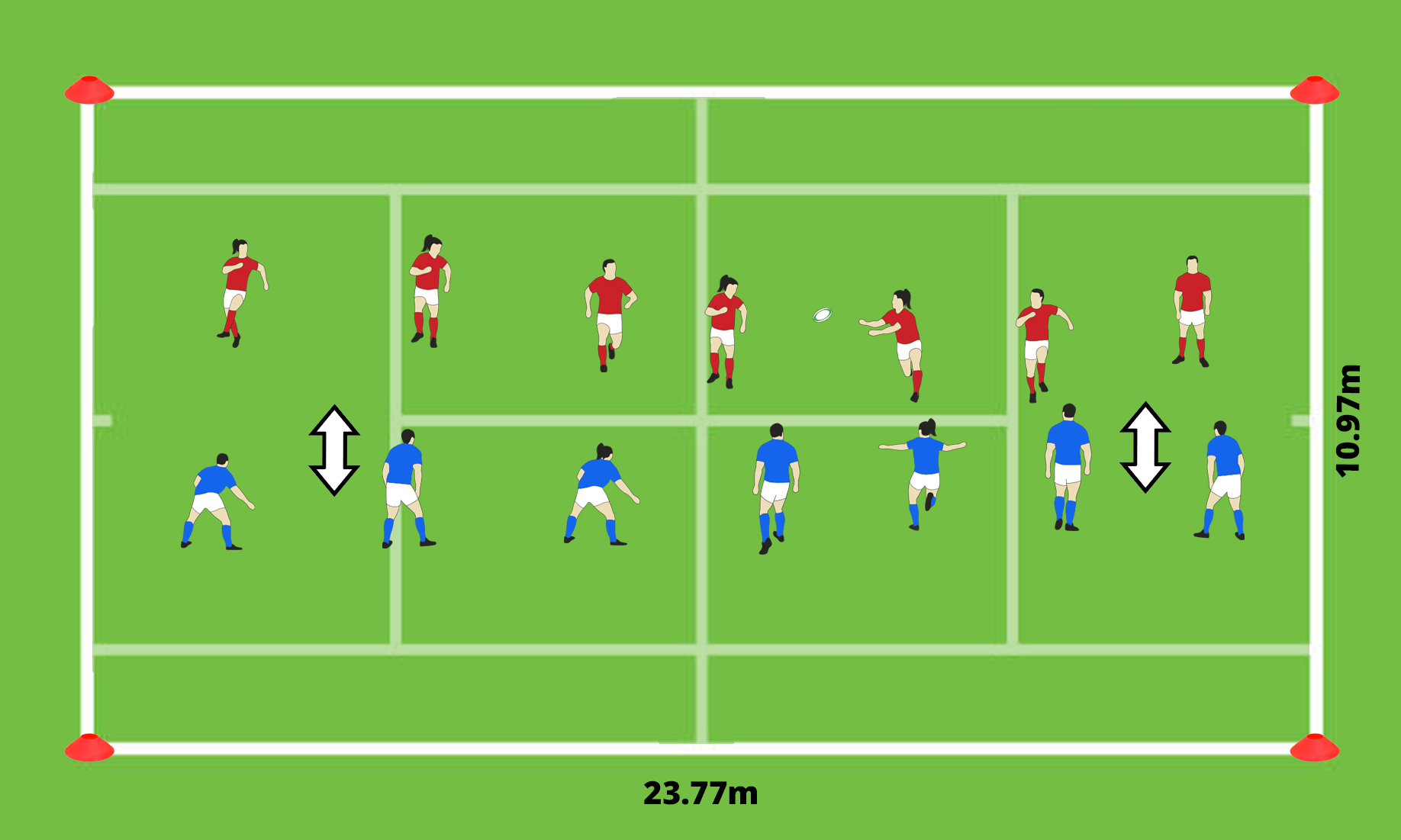
Game day format
Four 5-minute quarters with 2-minute breaks. Teams change sides each quarter.
|
Warmup 5-10 mins |
5min 1/4 |
2min break |
5min 1/4 |
2min break |
5min 1/4 |
2min break |
5min 1/4 |
Warm-up
 |
 |
 |
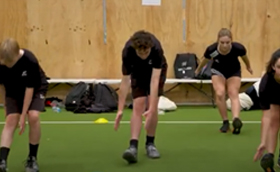
| Farmers Gate | Scoop | Alternate squats |
 |
 |
 |
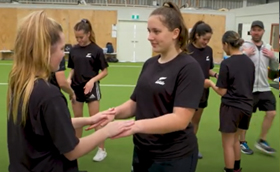
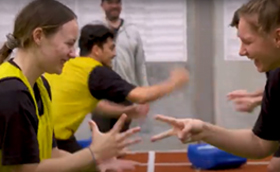
| Shoulder mobility | Walking rock, paper, scissors | Flinch |
Cool-down
After the game, walk slowly around the area, do some gentle static stretches or yoga-style holds, then have a drink.
Walking rugby laws
Walking rugby follows World Rugby laws, with these variations.
Officials
No officials are required. Walking rugby can be self-refereed.
The Team
7 v 7 on the court (or 5 or 6 a side). Mixed teams are encouraged.
Start of play
Play starts with a tap and pass at halfway at the start of each quarter and after each try. After a try, the team that conceded restarts.
Substitutions
Substitutions are allowed at any time (rolling subs) and there are no limits to the number of substitutions.
Walking
Players must always have one foot on the ground. No running or jumping.
Scoring a try
A try is scored when the attacking player with the ball walks across the try-line.
Scrums
Scrums are made up of three players: one from the attacking team and two from the defending team. The attacking team will also need one player to put the ball into the scrum.
‘Tackling’ (touch)
Once touched, the ball carrier can keep walking but cannot score. If they are touched a second time, it’s a turnover, and play restarts with a scrum.
Ball out of bounds
If the ball goes out of bounds, the other team gets a scrum.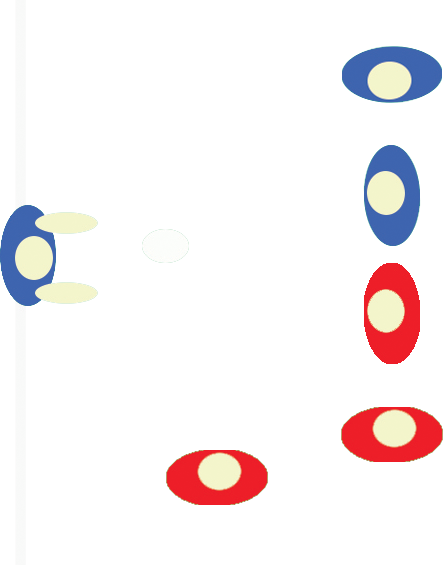
Lineout
Experienced teams can choose to use lineouts.
- Lineouts are 1 v 1, plus Halfbacks.
- The throwing team has one player in the lineout.
- The defending team has one player in the lineout, plus a Hooker and Halfback in position.